

Animals rarely arrive at your organization as isolated cases. They come in as litters, as bonded pairs, as the six kittens someone found under a porch. They form connections in your care too, whether that's a playgroup that works well together or a short list of dogs who stay calm at a busy adoption event. Groups gives you a way to record those connections directly in an animal's record, so the knowledge lives in your system instead of in one person's memory.
A group can be whatever you need it to be. Some organizations use them the obvious way, tracking a litter from intake through adoption. Others build groups for the dogs who do well at offsite events, the cats who tolerate a communal room, or animals who are part of active court cases. An animal can belong to as many groups as makes sense, so a puppy can be part of her litter, part of a vaccination cohort, and part of your list of good candidates for a weekend event all at once.
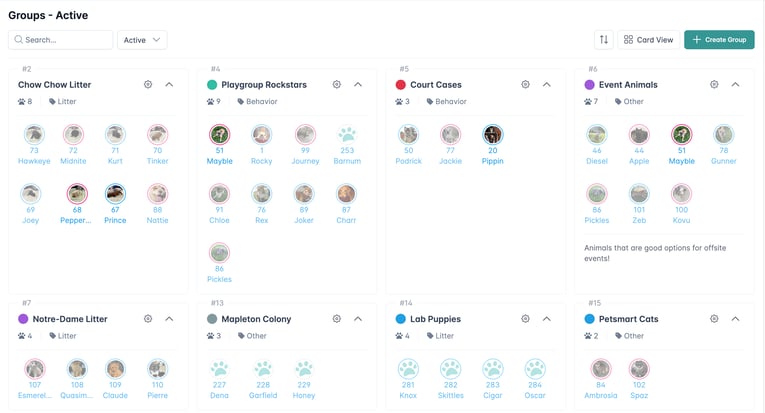
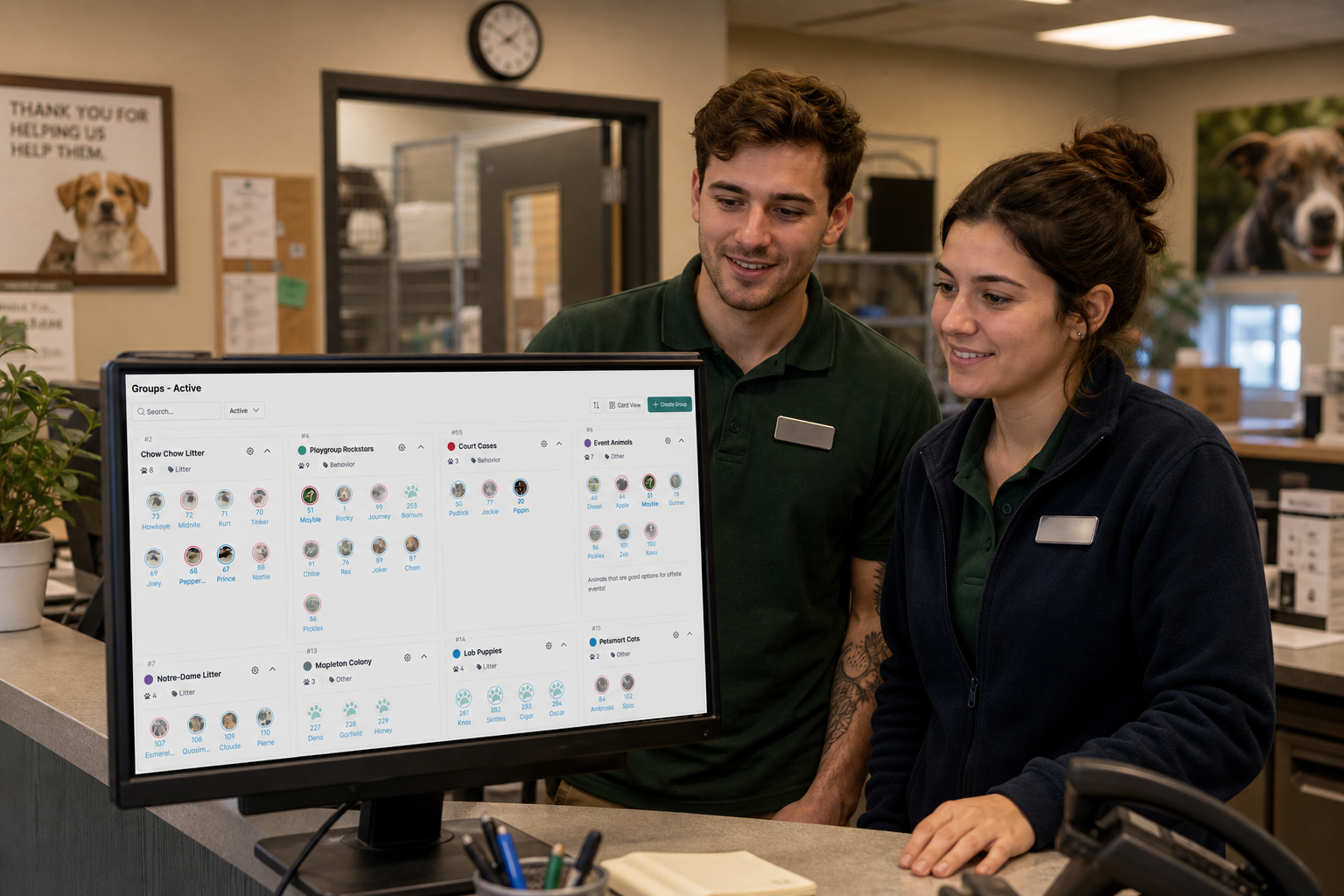
What makes Groups especially easy to work with is the visual dashboard. Instead of managing these relationships through lists, notes, or individual animal records, the dashboard gives you a visual view of the group and the animals connected to it. You can see who belongs together and manage the group from one place. Whether you're working with a litter, a playgroup, or animals headed to an adoption event, the dashboard makes those connections easier to see and easier to manage.
Groups also stay attached to an animal indefinitely. When an animal leaves your care, the group memberships go with them and remain in place unless a staff member removes them. That matters more than it might sound. If a dog returns three years after adoption, you can open his record and see the groups he was part of before, find his littermates, and check whether any of them are still with you or have histories worth knowing about. The context is waiting for you instead of having to be reconstructed.
The practical payoff shows up throughout AnimalsFirst. Groups works as a filter in data tables almost everywhere you need it, while the visual dashboard gives you a simple place to actually manage the animals in a group. Pull up a single litter to check weights, generate a list of every animal cleared for offsite events, or narrow a medical report down to one cohort. It turns a question that used to mean scrolling, cross-referencing, and remembering who belongs with whom into a couple of clicks, which is usually all anyone wanted in the first place.